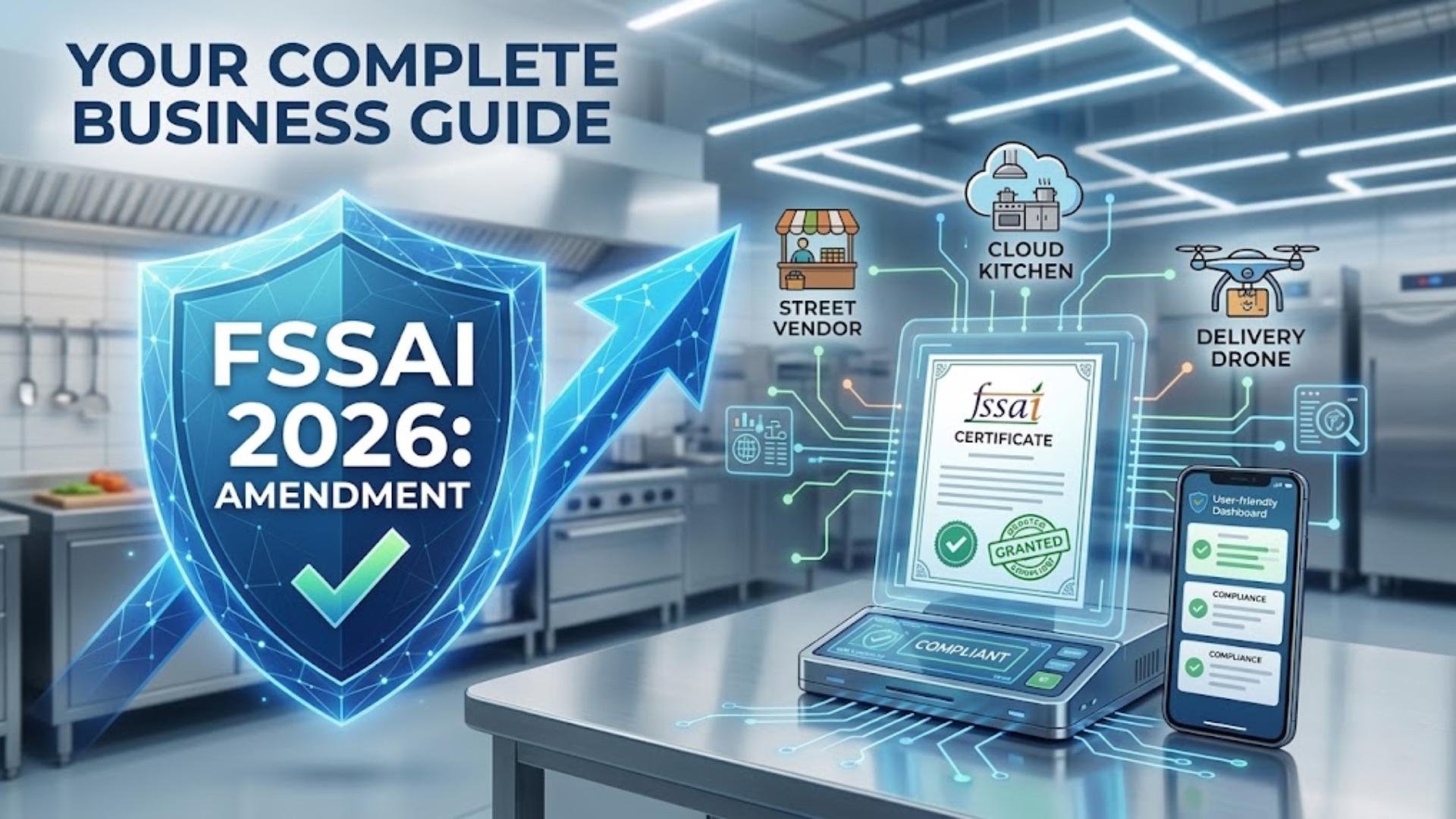
If running a food business in India was a video game 🎮, the FSSAI 2026 Amendment just dropped a major update.
- New rules.
- New compliance levels.
- New opportunities.
The Big Picture: This is not just a legal update; it’s a complete shift towards a compliance-first food industry in India.
🔍 What is the FSSAI 2026 Amendment?
The FSSAI Amendment 2026 significantly updates the Food Safety and Standards (Licensing and Registration) Regulations, 2011.
Its core objective is to bring India’s informal food sector into a structured, regulated ecosystem, aligning with GST digitisation and UPI adoption.
⚙️ Key Changes in FSSAI 2026 Amendment
1. Expanded Definition of Food Business Operators (FBOs)
📜 Legal Excerpt:
“Petty Food Business Operators include street vendors, hawkers, itinerant vendors, temporary stall holders…”
🧠 What It Means:
Street vendors and small operators are now:
- Officially recognised
- Legally accountable
- Part of the formal economy
Business Impact Upside:
- Increased customer trust
- Eligibility for Swiggy/Zomato onboarding
- Growth opportunities
Business Challenge:
- Hygiene compliance is now mandatory
- Inspections likely to increase
🎯 DESS Insight:
Think of this as getting a verified badge ✔️
More visibility—but also more scrutiny.
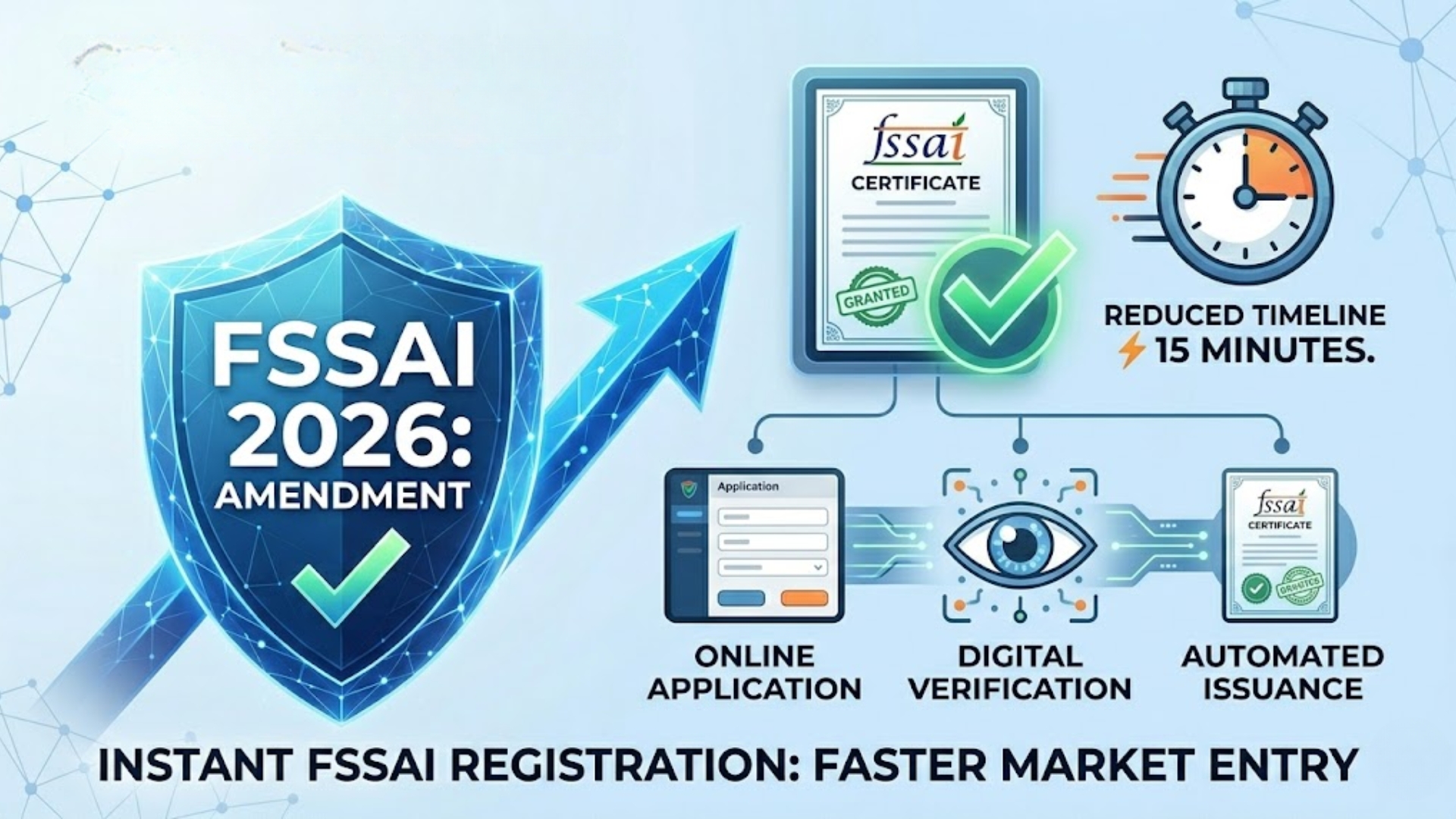
2. Instant FSSAI Registration
📜 Legal Excerpt:
“Registration may be granted instantly… subject to submission of required documents.”
The Change: FSSAI is enabling faster business setups via the FoSCoS Portal.
Risk:
- Compliance responsibility shifts to you
- No excuse for missing filings
🎯 DESS Insight:
This is like instant credit card approval 💳
Easy entry—but strict penalties if mismanaged.
3. Automatic Recognition for Street Vendors
If you are registered under the Street Vendors Act, 2014, you are automatically recognised under FSSAI.
⚠️ However: Schedule 4 Hygiene Standards still strictly apply to your operations.
4. MSMEs & Cottage Food Businesses Now Regulated
📜 Legal Excerpt:
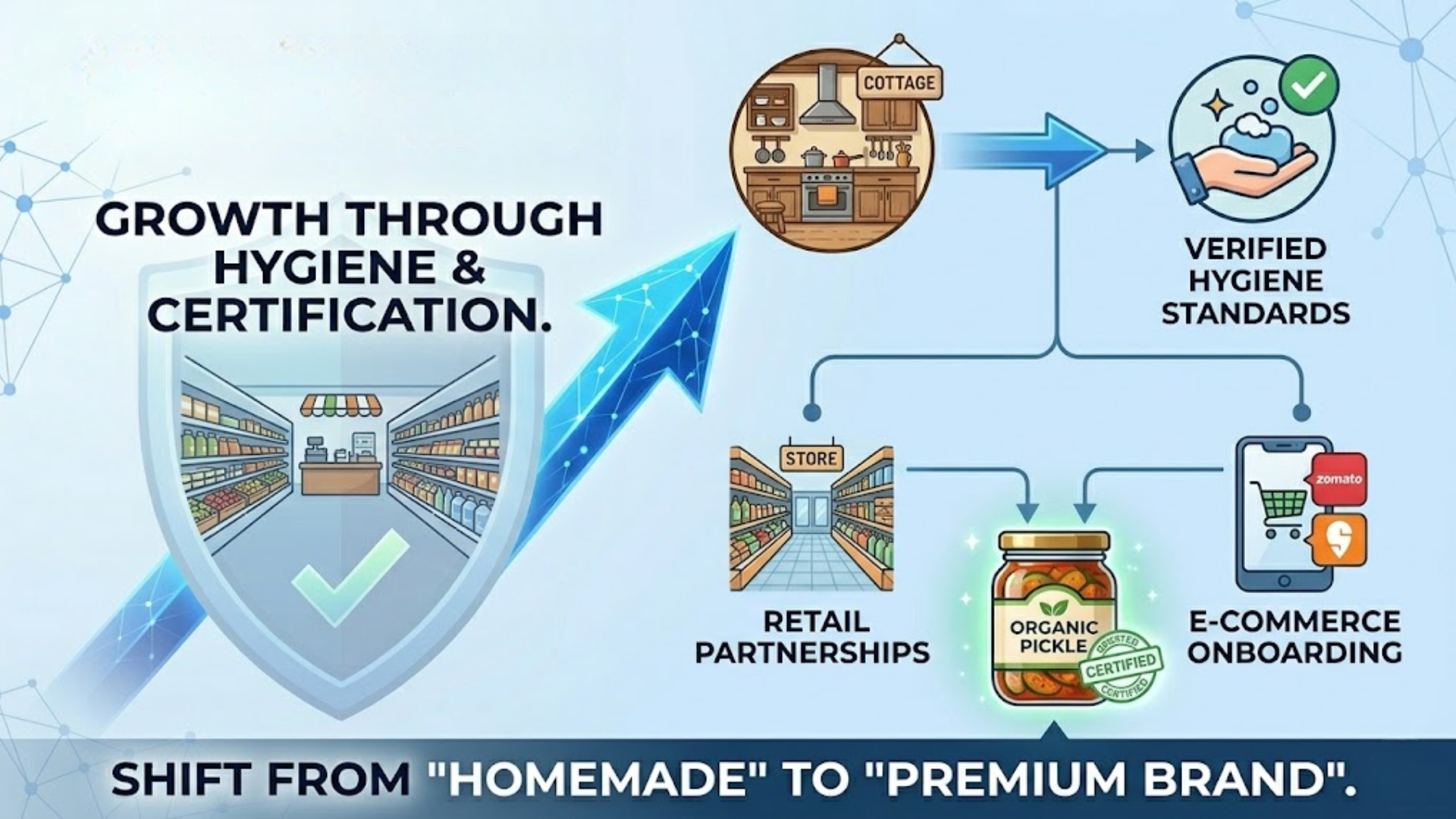
“Such operators shall comply with hygiene and safety requirements as specified…”
🧠 What It Means:
Your "homemade" food business is now a regulated entity and a potential brand.
🎯 DESS Insight:
Transition from:
👉 “Aunty ka achar”
to
👉 “Premium Organic Brand” 🏷️
5. Strict Compliance & Automatic License Suspension🚨
This is the most critical update for 2026.
📜 Critical Clause:
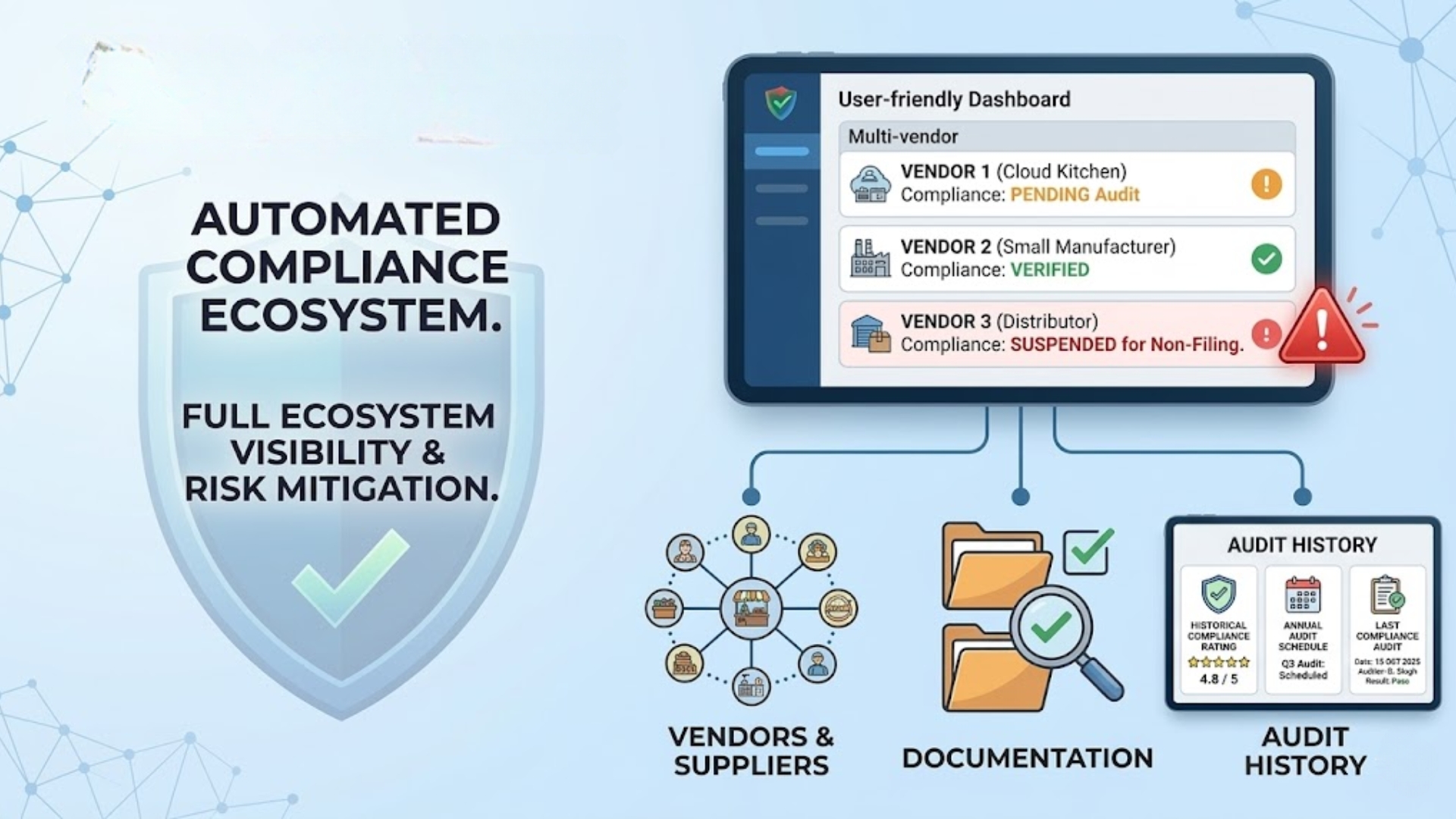
“License shall be suspended automatically for non-payment of fees or non-filing of returns…”
🧠 What It Means:
No manual intervention. No warnings.
👉 Everything is automated
Impact on Businesses
| Business Type | Potential Impact of Non-Compliance |
|---|---|
| 🚀 Startups | Growth disruption & loss of investor trust |
| 🏭 MSMEs | Termination of retail partnerships |
| 🏢 Corporates | Massive brand damage & legal penalties |
6. Large Food Businesses Face Higher Risk
📜 Legal Excerpt:
“Failure to comply… shall result in suspension of license…”
🧠 What It Means:
👉 One compliance failure = business halt
⚙️ Risk Areas:
- Vendor compliance
- Franchise operations
- Multi-location audits
🎯 DESS Insight:
Your brand is only as strong as your weakest supplier.
The Bigger Picture: India’s Food Industry is Evolving
This amendment signals:
👉 A shift from informal operations
👉 To structured, scalable businesses
What Should You Do Now? (Action Plan)
✅ Immediate Actions
- Check Status: Verify your current license on the official FSSAI site.
- Verify Filings: Ensure all annual returns (Form D1) are updated.
- Staff Training: Enrol your team in a FoSTaC Training program.
✅ Strategic Growth
- Use compliance as a branding advantage. Displaying "FSSAI Certified & Hygienic" builds immediate customer trust 💯
❓ FAQs on FSSAI 2026 Amendment
1 . Who is affected by the FSSAI 2026 Amendment?
All food operators, including vendors, startups, MSMEs, and large companies.
2. Is FSSAI registration now mandatory for all?
Yes, all food businesses must be registered or licensed.
3. What happens if I miss compliance filings?
Under the 2026 rules, your license can be automatically suspended without a manual warning.
4. Can small food businesses grow under this amendment?
Yes, it opens opportunities for branding, online sales, and expansion.
6. Does this help startups?
Yes—it offers faster registration but implements stricter digital tracking of compliance.
🎯 Final Thought
The FSSAI 2026 Amendment separates businesses that "manage somehow" from those that "scale professionally." In today’s market, the professional always wins.
Get in touch with DESS if you want to grow your business with an agency that stays updated.